
Technology
Potent agonists of the formyl peptide receptor-1 (FPR1).
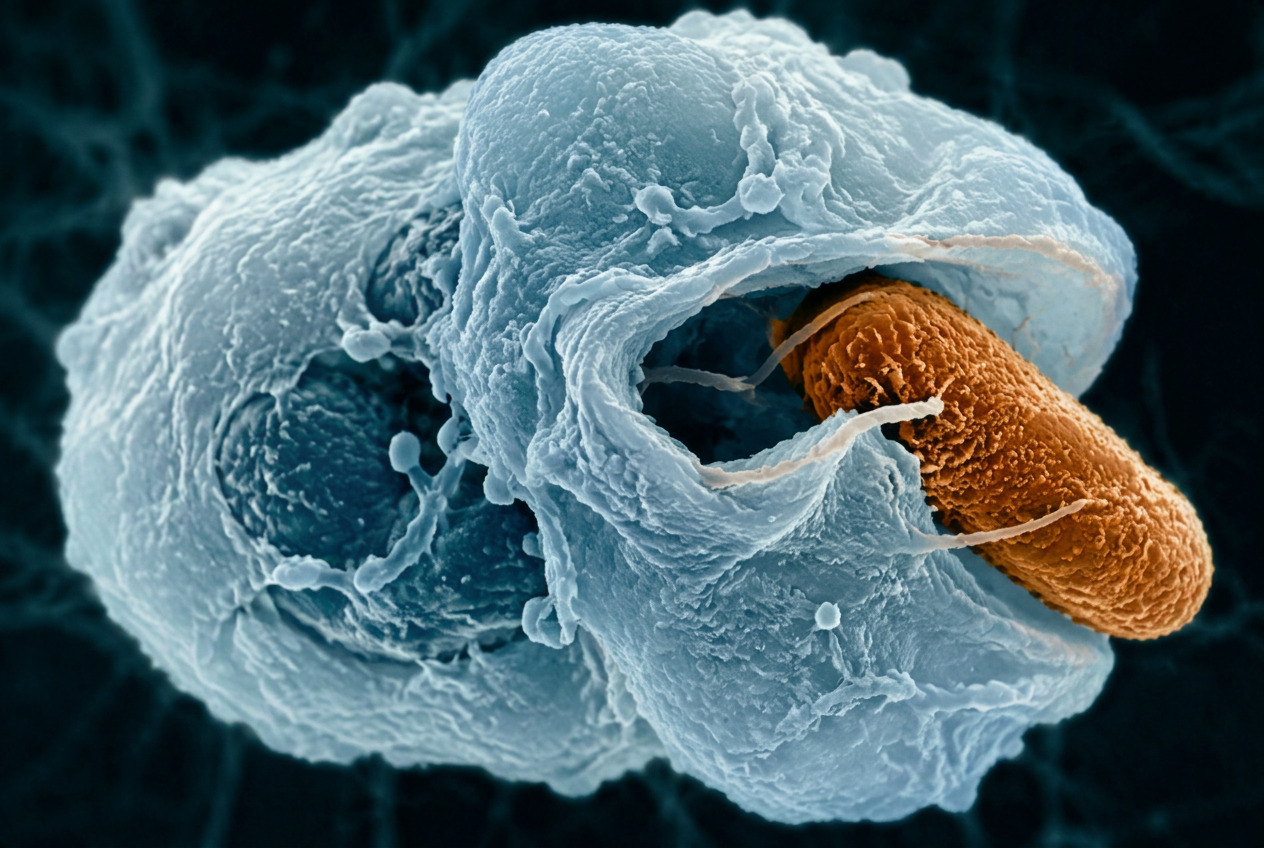
Rather than attacking bacteria, Inicure harnesses the innate immune system. Our compounds selectively activate FPR1 and stimulate the NOX2 pathway, enhancing the immune system's natural production of reactive oxygen species — critical for bacterial killing and for resolving inflammation.
- 01
Selective FPR1 activation
Our small molecules act as potent, functionally selective agonists of the formyl peptide receptor-1 (FPR1) on immune cells.
- 02
NOX2 and ROS response
FPR1 signalling stimulates the NOX2 complex to produce reactive oxygen species (ROS) — a natural mechanism for bacterial killing and inflammation resolution.
- 03
The immune system clears the infection
Because the compounds do not target bacteria directly, the risk of resistance development is significantly lower.
Preclinical evidence
Efficacy in human cells and preclinical models — without toxicity.
Our compounds have demonstrated efficacy against resistant pathogens including Escherichia coli (UPEC) and Staphylococcus aureus (MRSA). Because they do not directly target bacteria, the risk of resistance development is significantly lower. Early safety studies indicate no adverse toxicological effects.
Lind S, Dahlgren C, Holmdahl R, Olofsson P, Forsman H. Functional selective FPR1 signalling in favour of an activation of the neutrophil superoxide generating NOX2 complex. J Leukoc Biol. 2021; 109: 1105–1120.
Read the publication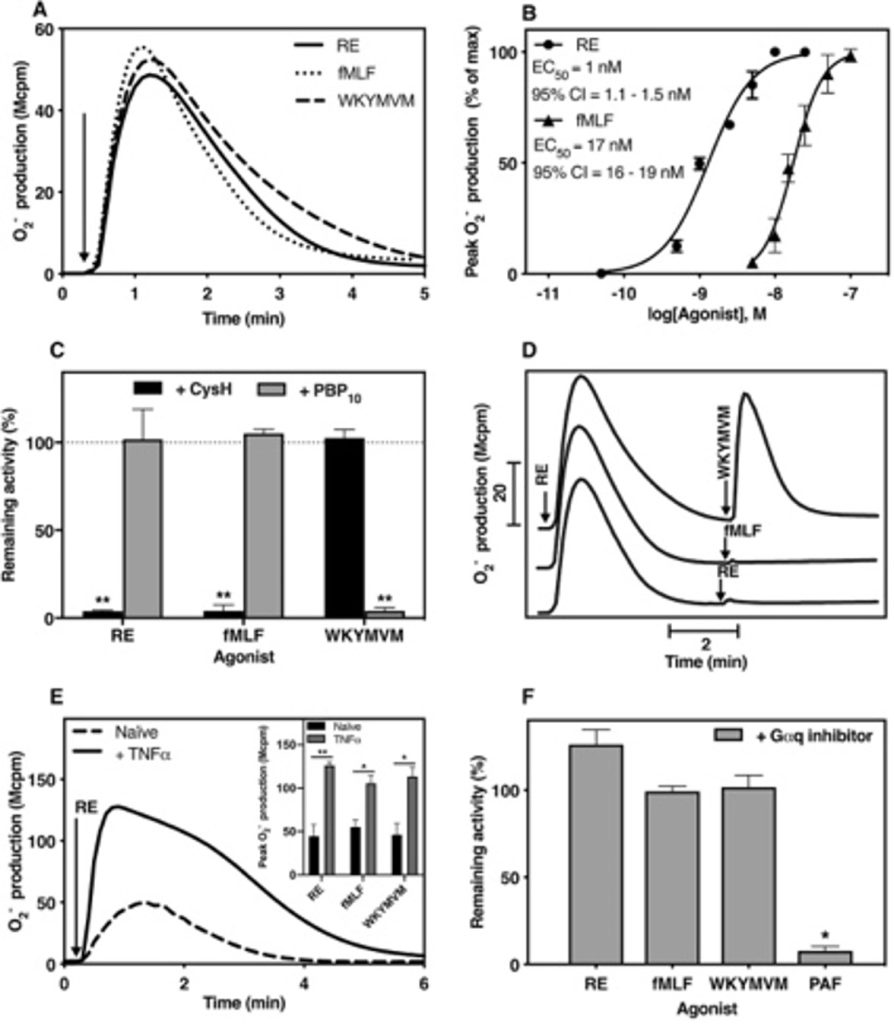
Scientific rationale for target
Why FPR1 is the right target.
Host-directed strategy: FPR1 is a host receptor, so targeting it could enhance antibacterial immunity without directly imposing additional antibiotic selection pressure on bacteria.
Innate immune sensing: FPR1 recognizes formylated bacterial peptides and helps neutrophils detect and respond to invading bacteria.
Enhanced neutrophil function: FPR1 activation can promote chemotaxis, phagocytosis, degranulation, and oxidative killing, all of which contribute to bacterial clearance.
Relevance to resistant infections: Because the therapeutic target is the host rather than a bacterial enzyme or structure, FPR1 modulation could potentially remain effective against antibiotic-resistant pathogens.
Potential for combination therapy: FPR1 modulation could complement antibiotics by strengthening host clearance while antibiotics inhibit bacterial growth.
Status
Where the programme stands
Well-characterised, selective FPR1 agonists with single nM EC50 as lead compounds for optimisation and CD selection.
Patent application filed (September 2024).
Validated in vitro effect against several bacterial strains.
Objective and plan
Route to candidate drug selection
- 01
Lead optimisation based on selected primary lead structures.
- 02
ADME profiling, PK and formulation.
- 03
Ex vivo target activation, selectivity and efficacy.
- 04
Upscaled synthesis for preclinical in vivo models and PK.
- 05
Preclinical POC in relevant infection models.
- 06
CD selection and upscaled synthesis for regulatory toxicology.
Targeted patient group
Patients failed by today's antibiotics.
Chronic and life-threatening infections treated with suboptimal antibiotics — boosting the innate response may treat infections and save millions of patients.
Patients with hard-to-treat, recurrent chronic and life-threatening bacterial infections treated in hospital with anti-infective therapies, i.e. antibiotics (IV or topical).
Of main medical and commercial interest in high-income countries: UTI (E. coli) and infected wounds (S. aureus and P. aeruginosa).